Ground anchors
Overview
We install the largest ground anchors in Australia, with working loads ranging from 5kN to 9000kN.
Anchoring stabilises structures by reinforcing the ground and transferring loads into secure foundation layers. Serving as the backbone of piling systems, this cost-effective solution secures buildings and retaining walls, supports temporary excavations, and delivers long-term slope stabilisation.
At RGE, we specialise in complex, high-capacity permanent ground anchors, including SBMA and pressure-grouted systems for soft soils, as well as the largest anchors designed for bridges and dams. Our team can design and install anchors up to 508mm in diameter and down to 60m deep — all built for strength, compliance and durability in any soil or rock condition.
The advantages of ground anchoring
Reduced pile size and spacing
Reliable performance in any soil
Maximum support structure stability
Superior safety for heavy loads
61-strand ground anchoring systems
Our 61-strand anchoring systems are engineered for unparalleled precision. With adjustable spacer configurations, strands can be positioned to suit exact project requirements, ensuring accurate placement of the injection system and protective sheath.
Fully grouted and corrosion-protected, these systems provide safe and efficient load transfer into the ground while delivering decades of structural stability. Meet strict performance standards with proven, long-lasting support — even under the most demanding conditions.
Earth anchor installations with RGE
1. Site assessment & anchor design
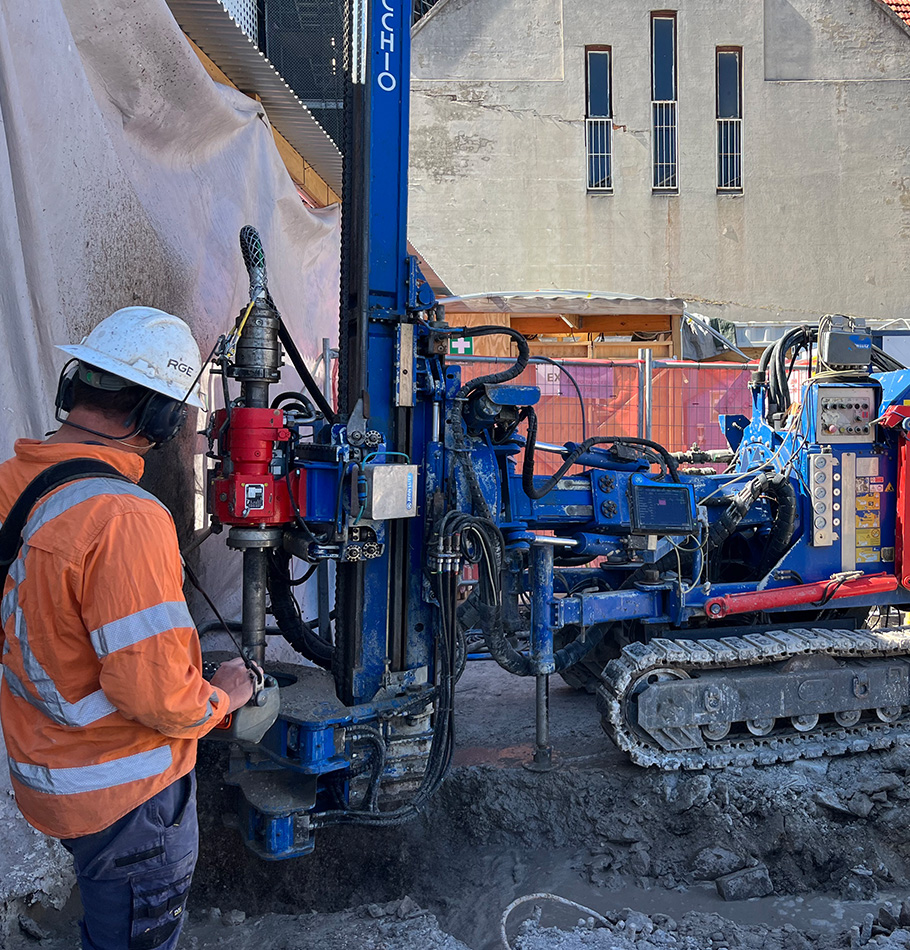
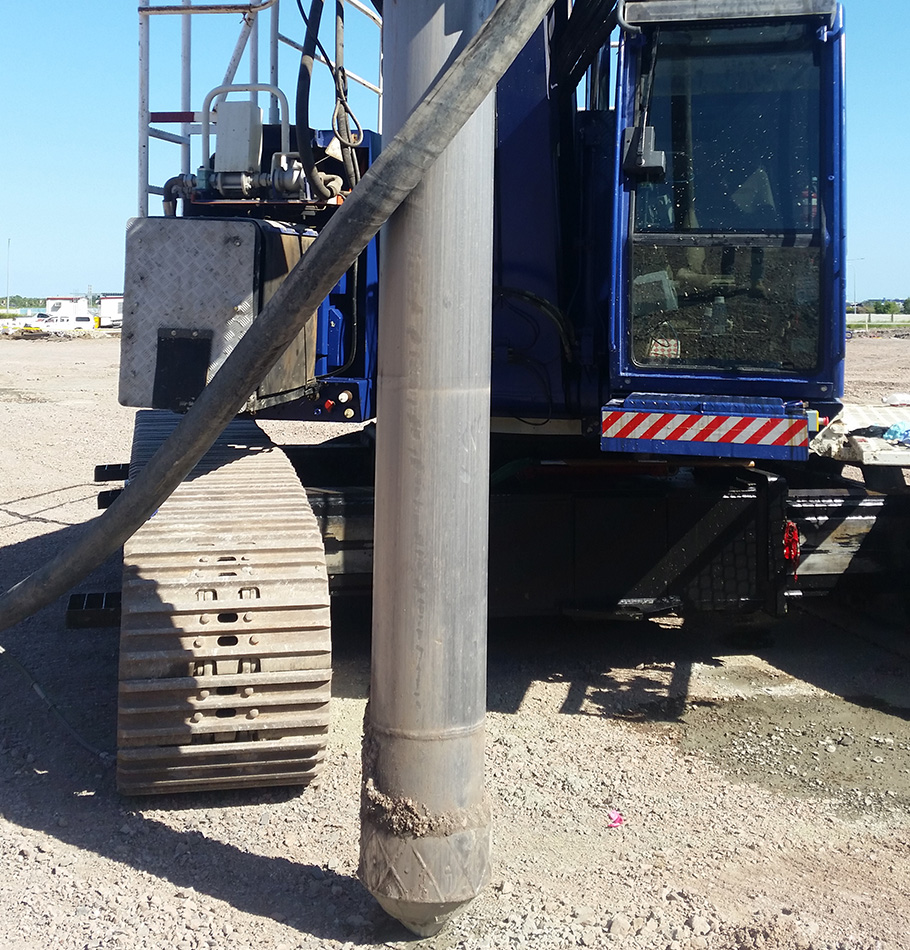
2. Precision drilling with large-diameter casings
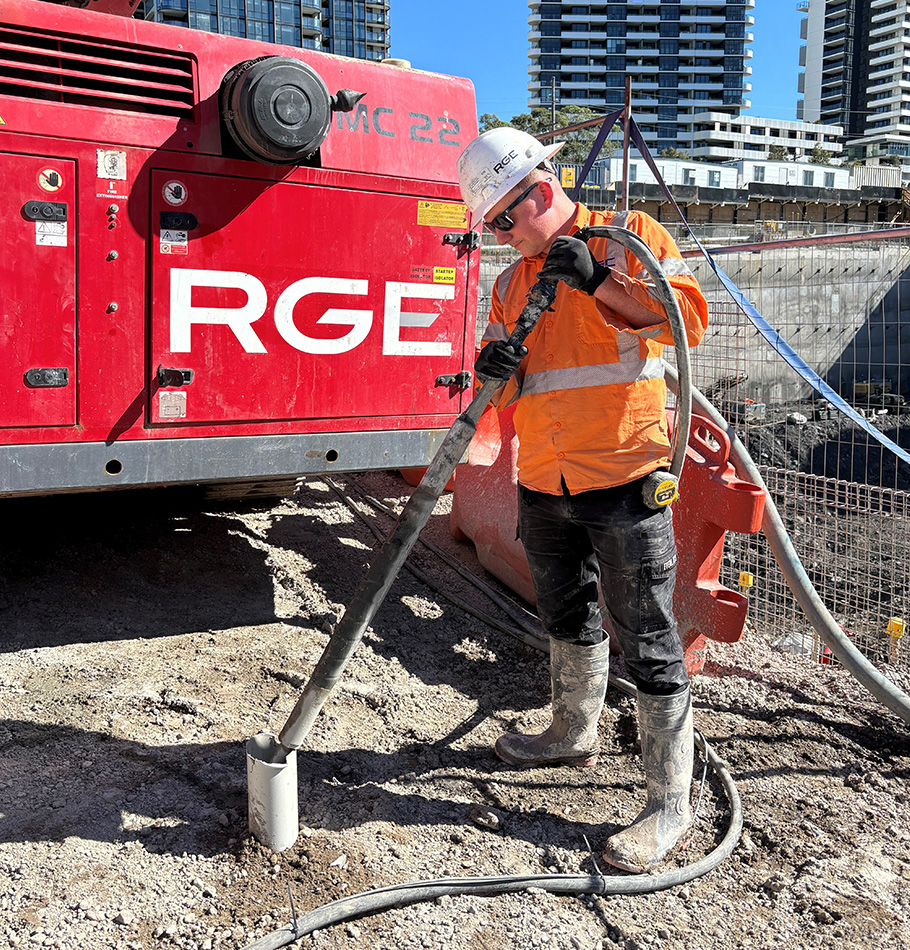
3. Tendon installation & high-strength grouting
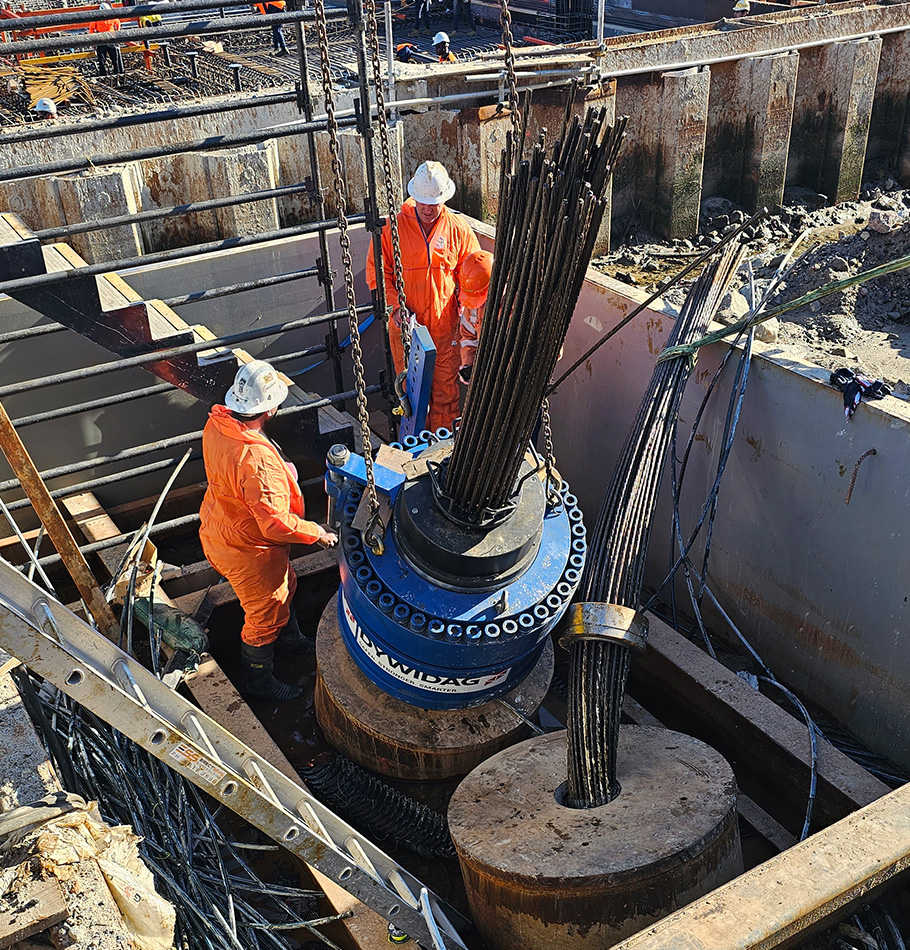
4. Stressing with high-capacity jacks

FAQs
What is a ground anchor?
A ground or earth anchor is a structural element used to transfer loads from a structure into the ground to provide stability and prevent movement. It typically consists of a steel tendon or bar inserted into a drilled hole and secured with grout.
The anchor is then tensioned, creating a pre-stressed system that holds retaining structures, slopes, or foundations firmly in place.
Ground anchors are widely used in construction, civil engineering, and infrastructure projects where long-term stability is essential.
What are common anchoring applications?
Ground anchors are used wherever soil or structural stability is needed. Typical applications include:
- Excavation support – anchoring retaining walls such as sheet pile, cast-in-place, or diaphragm walls for deep excavations.
- Slope stabilisation – preventing landslides, erosion, or wall failure on steep or unstable ground.
- Transport infrastructure – providing stability for road and rail cuttings, bridge abutments, and underpasses.
- Marine and flood defence works – securing quay walls, locks, sluices, and sea walls in both new builds and refurbishments.
Because of their adaptability, anchors are a reliable solution in projects ranging from urban basements to large-scale infrastructure.
What is the tensile load capacity of a ground anchor?
Ground anchors are designed to resist tensile loads, which are the pulling force applied along the length of the anchor. The load capacity depends on factors such as anchor length, grout bond strength, soil or rock conditions, and the steel tendon or strand configuration.
At RGE, our anchors are engineered and tested to handle working loads from 5kN to 9000kN, ensuring they meet strict safety and compliance standards for both temporary and permanent applications.
What soil conditions are suitable for ground anchors?
Ground anchors are versatile and can be installed in a wide range of soils, including clays, sands, silts, gravels, and weathered rock. They perform best when drilled into dense or stable strata that allow the grout bulb to bond securely.
In weaker soils, additional anchor length or specialised drilling techniques may be required to achieve the necessary load capacity. A geotechnical investigation will determine whether ground anchors are the right solution for your site.
Can ground anchors be used in marine and coastal environments?
Ground anchors are commonly used at marine and coastal sites to secure quay walls, seawalls, flood defence barriers, and other hydraulic structures.
In these environments, anchors are designed with corrosion protection systems such as double corrosion protection (DCP), encapsulated grout bulbs, or sacrificial steel thickness.
These measures ensure durability and long-term performance, even in aggressive saltwater conditions.
Do ground anchors need engineering certification in Australia?
Yes. Ground anchors must be designed and certified by qualified engineers like RGE to ensure they meet the requirements of Australian Standards (AS 4678, AS 3600, and related codes). Certification covers both the design and installation, including load testing and quality assurance.
This process ensures the anchors provide the required stability for the structure and comply with local council and regulatory approvals.
Do ground anchors require maintenance?
Permanent ground anchors are designed with corrosion protection to minimise maintenance requirements. However, in critical infrastructure projects or aggressive environments, periodic monitoring may be recommended to confirm anchor performance.
Temporary anchors generally do not require maintenance, as they are removed or de-stressed once the project is complete.
How much does a ground anchor cost?
The cost of a ground anchor in Australia varies depending on soil conditions, design load, anchor type, installation method, and whether the system is temporary or permanent. Project size and access constraints also affect price.
For a tailored cost estimate, enquire today.
How long does it take to install ground anchors?
The time it takes to install ground anchors depends on site conditions, access, anchor length, and ground type.
At RGE, we will provide a project-specific timeline after completing a geotechnical assessment and design.
Do you install ground anchors across Australia?
Yes, our ground anchor installation services are available across Australia, including Sydney, Melbourne, Brisbane, Perth, and regional project locations.
Our experienced team handle everything from design and engineering to installation and testing, ensuring anchors meet strict safety and performance standards.
For detailed pricing, technical specifications, or safety data, enquire today.
Contact RIX Ground Engineering
Our excellent technical and operational knowledge allows us to tailor make solutions that give our clients the combination of cost, time and quality that best fits their requirements.




Improve ground conditions with RGE
RGE is part of the The RIX Group, offering specialist geotechnical services across Australia and New Zealand. Our resources include over 50 major items of plant and 400 employees.
We are unique in the comprehensive range of services we provide, including ground engineering, ground improvement, shotcrete, retaining walls, piling, slope stabilisation, rope access asset maintenance, mining, tunnelling, demolition, and earthworks.