Grout injection services
Overview
Reduce permeability, increase strength, and cut long-term maintenance costs.
Grout injection strengthens weak soil and controls water flow by pumping specialised grouts into soil or rock. From foundations and slopes to tunnels, dams, and basements, this ground improvement technique is trusted across construction and infrastructure for safer, more stable results with lower maintenance costs.
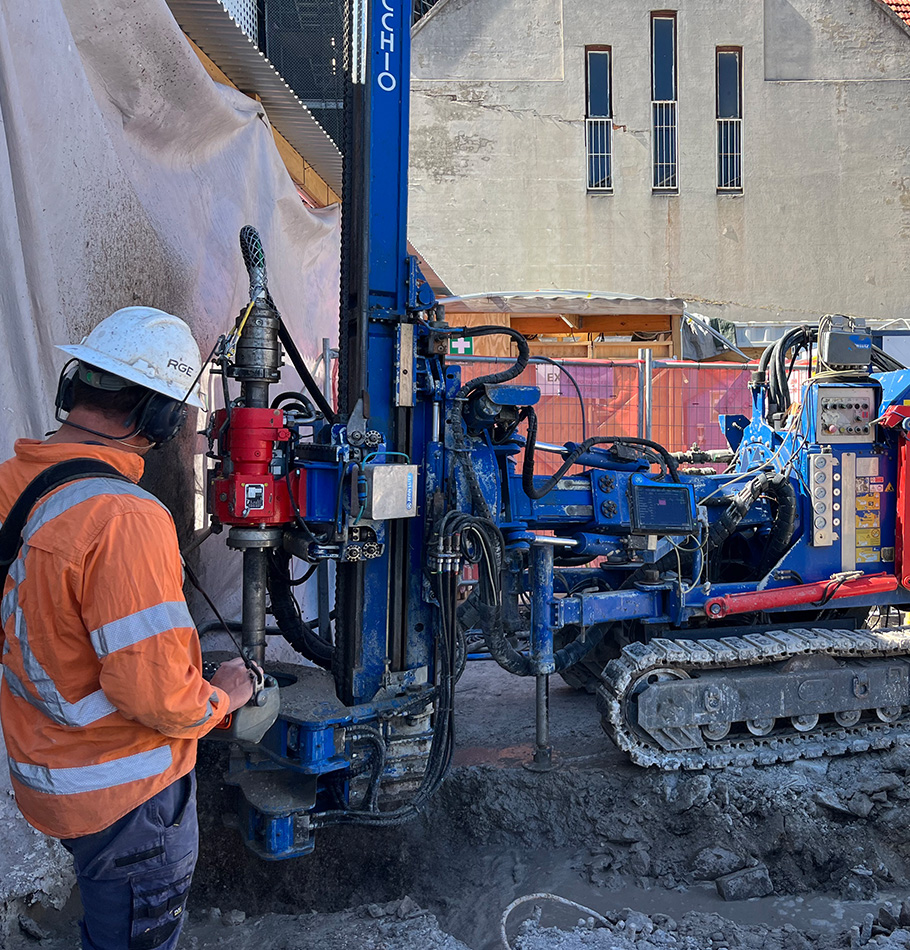
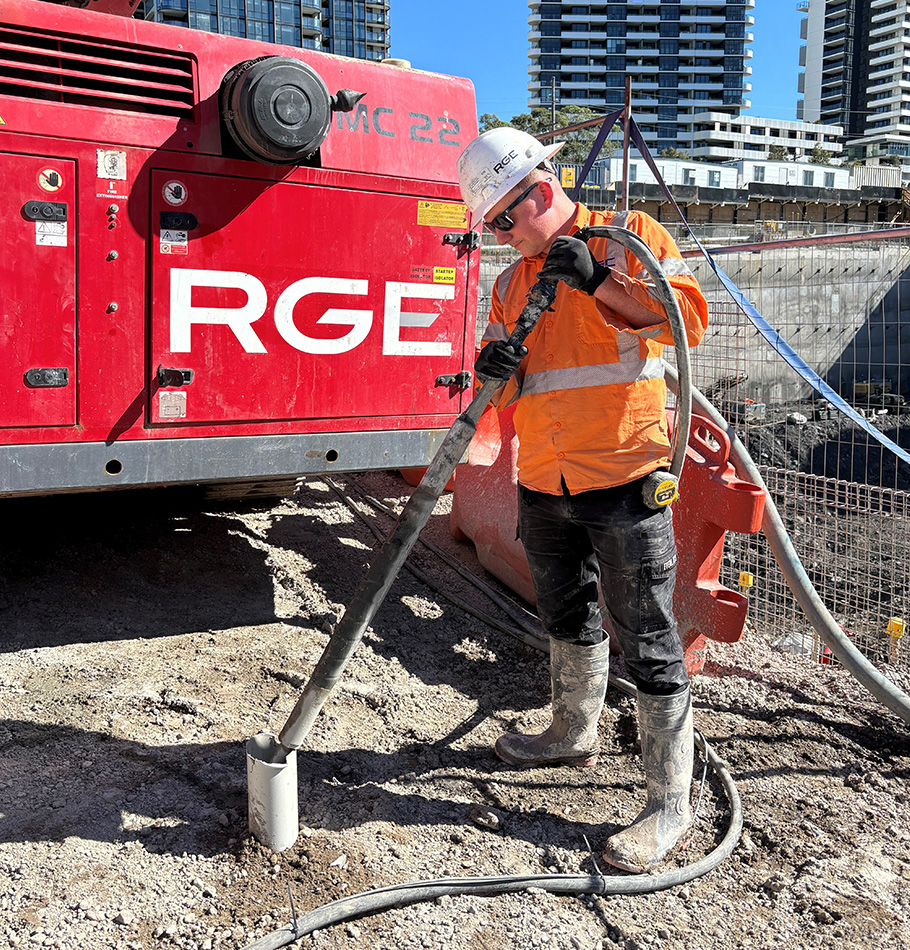
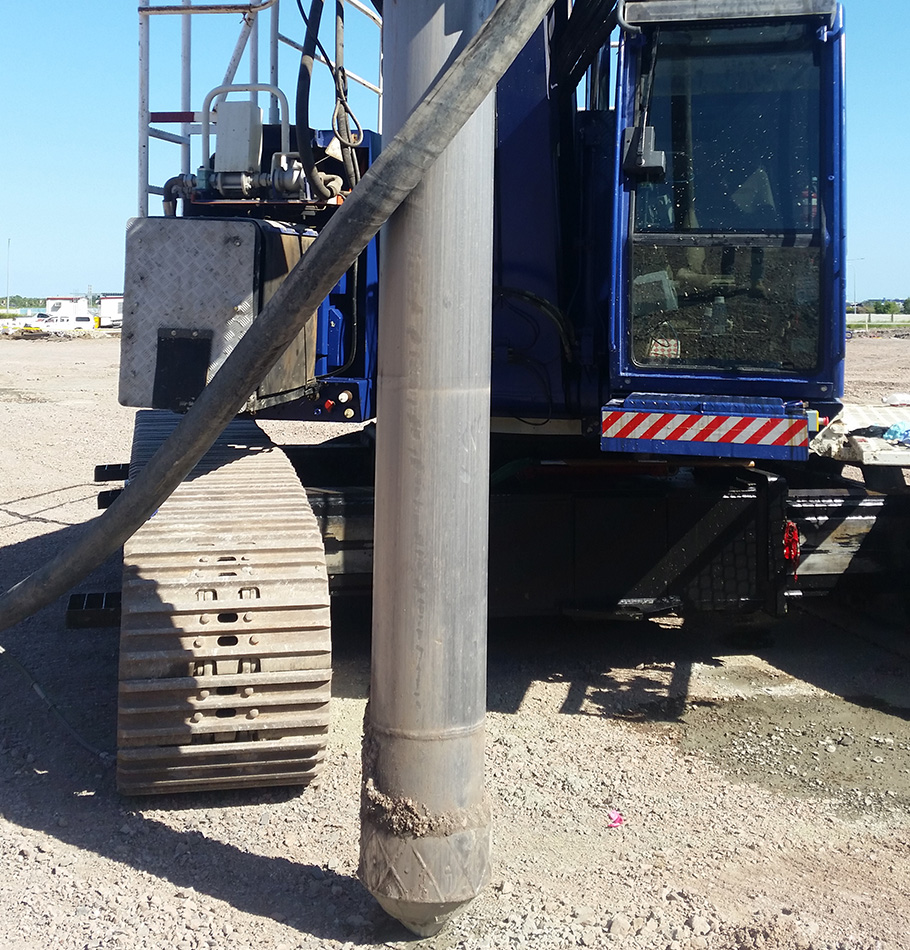
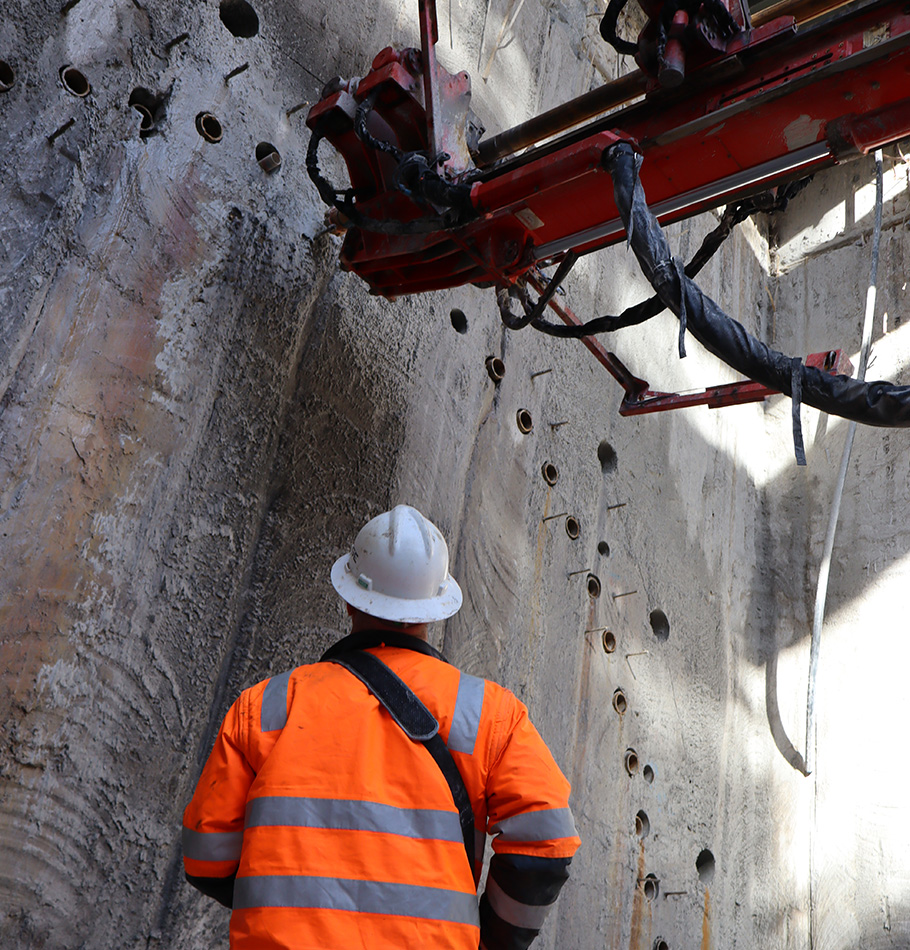
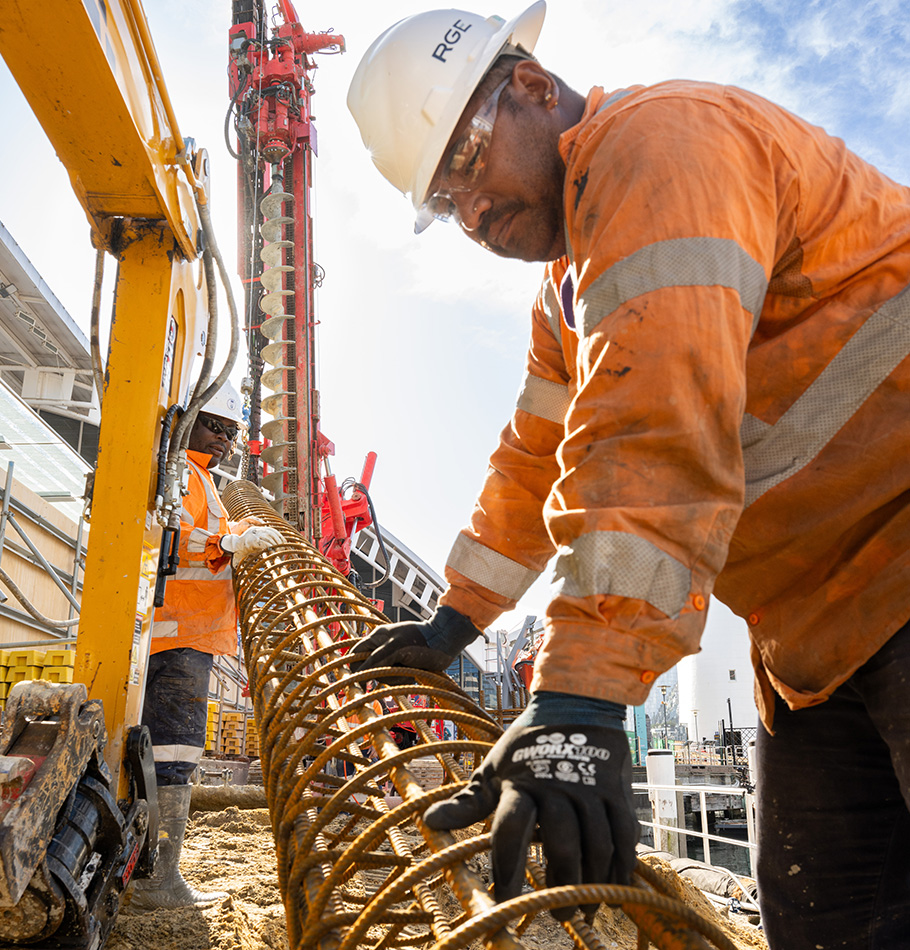
At RIX Ground Engineering (RGE), we use a variety of grout injection techniques and materials to address all soil and rock types. Our range of plant covers any access type, including underground and restricted sites.
Stabilise soil, stop leaks and fill fractures with cost-effective grout injection techniques
Water stop grouting
Water stop grouting is designed to permanently seal water ingress in tunnels, basements, and shafts where high-flow or persistent leaks are a risk.
Using PU (polyurethane) or acrylic grouts, the process creates watertight barriers through soil, rock, or concrete, protecting existing structures from groundwater pressure and long-term damage.
Pressure grouting
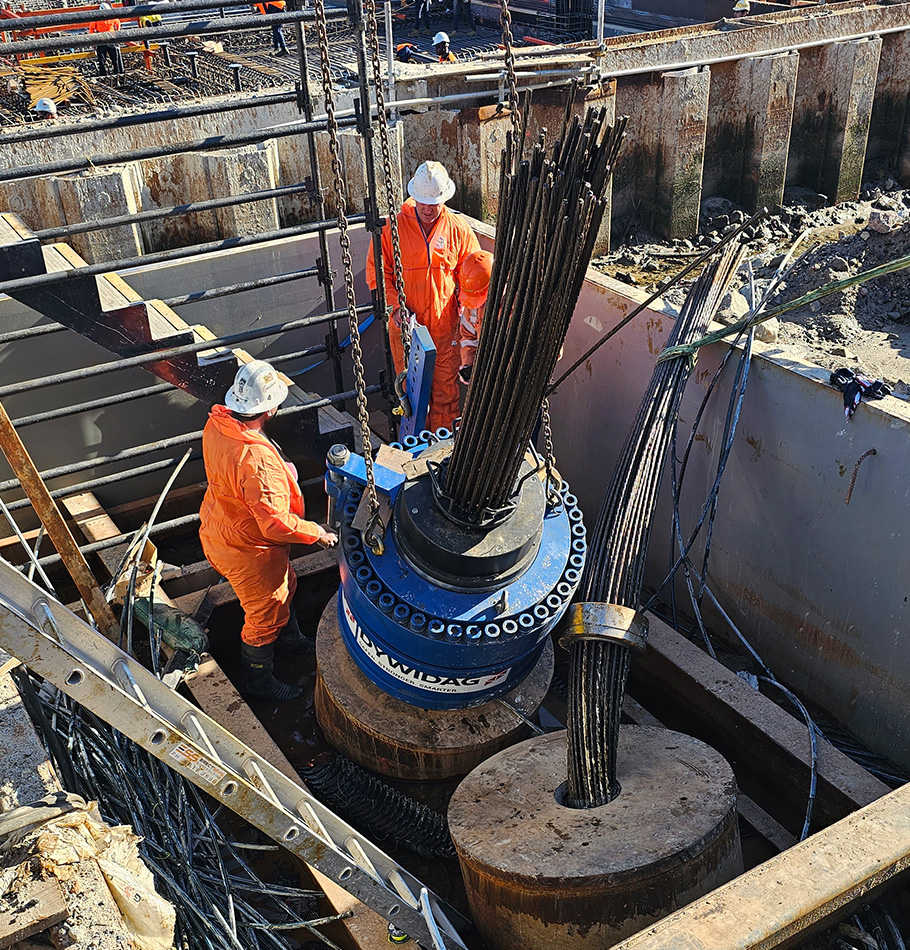
Pressure grouting is used when fractured rock allows water to seep through and creates instability. Grout is injected under pressure into cracks and voids, binding the rock mass together.
This decreases permeability, bolsters strength, and helps control groundwater in critical infrastructure such as dams, tunnels, and foundations.
Low-impact permeation grouting
Permeation grouting is an efficient, affordable and low-impact method that solidifies granular soils like sand without changing their structure.
It is often used to stabilise ground ahead of excavation, reinforce tunnel and basement works, seal fractured rock, or fill large underground voids. Depending on the project, materials can include cement, ultrafine cements, silicate and chemical grouts, polyurethane, acrylates, or foamed grouts.
FAQs
What is grout injection for soil stabilisation?
Grout injection is a ground improvement technique that involves pumping a cementitious, chemical, or resin-based grout into soil or rock to increase its strength and reduce permeability.
By filling voids and binding loose material, grout injection stabilises foundations, controls water ingress, and improves load-bearing capacity. It is widely used in construction, tunnelling, dam repairs, and slope stabilisation across Australia.
When is this grout injection required?
Grout injection is required when the ground beneath a structure is too weak, loose, or permeable to provide stable support.
Common applications include preventing settlement under buildings, reinforcing retaining walls, reducing water seepage through soil or rock, and stabilising ground before excavation or piling works.
This ground improvement technique is also recommended for heritage buildings where underpinning is needed without major disturbance.
Which grout injection method is most appropriate for my site?
The most suitable grout injection method depends on your ground conditions and project requirements. Common options include:
- Pressure grouting – grout is pumped under controlled pressure to fill voids, strengthen weak soils, and stabilise foundations. It’s commonly used for dams, tunnels, and deep ground stabilisation.
- Permeation grouting – a low-pressure method where thin grout flows into sandy or gravelly soils, binding particles together to increase strength without changing the soil structure.
- Water stop grouting – a specialised technique that creates watertight barriers by sealing cracks and joints in soil or rock, often used around basements, tunnels, and retaining walls to control groundwater flow.
Our geotechnical engineers can assess your soil type, water conditions, and design loads to determine which method will deliver the safest and most cost-effective result. Enquire now.
Does grout injection work in all soil types?
Grout injection is effective in many soil types, but the method must be matched to the ground conditions.
Permeation grouting works best in sands and gravels, pressure grouting suits fractured rock and voided soils, and water stop grouting is ideal for soils with high water flow.
Very dense clays may require alternative ground improvement techniques.
How deep can grout be injected into the ground?
Grout injection can be carried out at almost any depth required for your site conditions. Whether the work calls for shallow treatment just a few metres below ground or extends much deeper, we have the capability to go as far as needed to achieve the best outcome.
The achievable depth depends on the chosen method, grout type, and site conditions. Pressure techniques are typically used for deeper stabilisation.
Can grout injection be used to repair foundation settlement?
Yes. Grout injection is commonly used to repair and stabilise foundations affected by ground movement or subsidence.
By densifying weak soils and filling voids, it restores load-bearing capacity and reduces further settlement, making it a practical solution for both homes and commercial buildings.
How long does grout injection last?
When designed and installed correctly, grout injection can last for several decades. The lifespan depends on soil conditions, the type of grout used, and exposure to groundwater.
Cement-based grouts are highly durable, while chemical grouts are effective for long-term water control when properly applied.
How much does grout injection cost?
The cost of grout injection varies depending on factors such as soil type, site access, grout material, and the scale of stabilisation required.
An on-site investigation and geotechnical design are essential to provide an accurate cost estimate tailored to your project. Enquire today to get started with RGE.
Do you provide grout injection services Australia-wide?
Yes. Our grout injection specialists operate across Australia. Enquire now to arrange grout injection services for your site.
Contact RIX Ground Engineering
Our excellent technical and operational knowledge allows us to tailor make solutions that give our clients the combination of cost, time and quality that best fits their requirements.
Improve ground conditions with RGE
RGE is part of The RIX Group offering specialist geotechnical services across Australia and New Zealand. Our resources include over 50 major items of plant and 400 employees.
We are unique in the comprehensive range of services we provide, including ground engineering, ground improvement, shotcrete, retaining walls, piling, slope stabilisation, rope access asset maintenance, mining, tunnelling, demolition, and earthworks.